. Skip to main content
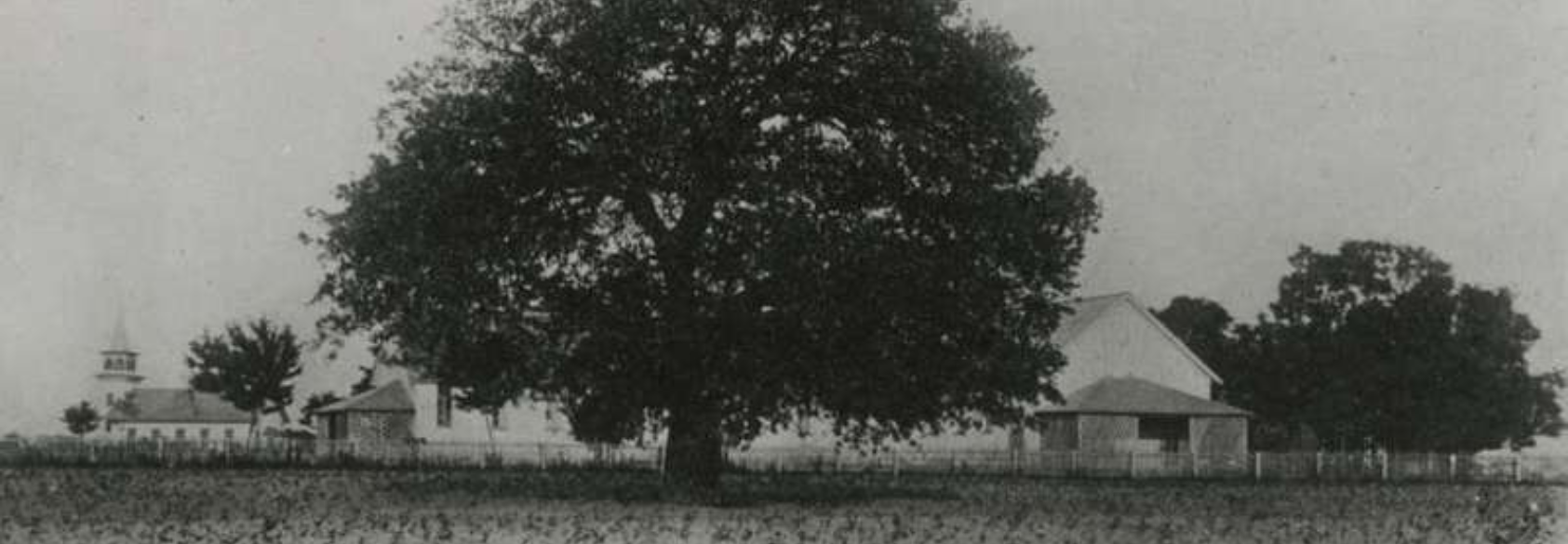
Emancipation Oak, Hampton, Va.

Emancipation Oak, Hampton, Va. Photographer unknown. Online Exhibitions, accessed February 27, 2025, https://www.virginiamemory.com/online-exhibitions/items/show/420

Celebrating the Power of Black Education, Labor — and History

February 28, 2025

Celebrating the Power of Black Education, Labor — and History

From Mary Smith Peake’s defiant act of teaching enslaved children to the legacy of Black labor unions, this inspiring piece honors the resilience, unity, and progress that continue to shape the fight for justice today.

Share

Share On Facebook
Share On Twitter
Share On Pinterest
Share On LinkedIn
Email

By Fedrick C. Ingram

Sometimes your story starts without you.

Mine started in 1861 in Hampton, Va., when a Black teacher named Mary Smith Peake risked her life and livelihood to teach the children of slaves to read — an illegal act punishable by everything from fines, whippings and even death. Peake committed this crime under the shade of a giant oak tree, which would soon be known as “Emancipation Oak,” as it was the site where enslaved Virginians would learn they had been freed from bondage.

A century later, a man named William Lucy began working with a group of Black sanitation workers who were on strike after two of their colleagues died on the job. The strike brought the attention of Martin Luther King Jr. and the emergence of one of the most iconic slogans ever seen: “I Am A Man” — which Lucy co-authored, writing himself into history.

Stepping on to Bethune Cookman University’s campus not only made me the first in my family to attend college, it also opened my eyes to the power of community, the power that comes from people united in purpose.

Less than a decade later, I was born in Miami, where I grew up as a shy, stuttering kid from the projects. My teachers, like Peake, spread their arms to welcome me, providing protective shade as I liberated parts of my soul I had not met before — through the beauty of music and the discipline of practice.

Stepping on to Bethune-Cookman University’s campus not only made me the first in my family to attend college, it also opened my eyes to the power of community, the power that comes from people united in purpose. On this historically Black college campus, seeing Black men and women like me pursuing not just perfection but collaboration in order to make life better for everyone was life-changing. The experience still motivates me to get out of bed in the morning.

From Bethune-Cookman, my path from music teacher to AFT secretary treasurer was laid out, even if I couldn’t see it at first. The joint path of education and labor, while special to me, is not unique, because so many like me have had to rely on those institutions to get a grasp on an American dream so often purposefully held just out of our reach.

Education is crucial

As long as Black people have been in this country, we have fought and died to be educated. Secretly learning to read by moonlight or passing books like contraband, we knew that learning to decipher the world of words and ideas around you blazes a path to self-realization. Reading reminded Frederick Douglass that he was not just as good as those who enslaved him — he was better. It reminded him, and most importantly, it reminded THEM, of his innate humanity.

That’s why when white society fought tooth and nail to keep us out of their schools, we built our own. Our current system of historically Black colleges and universities started BEFORE the Civil War and expanded to a network of more than 100 schools across the country.


As long as Black people have been in this country, we have fought and died to be educated. Secretly learning to read by moonlight or passing books like contraband.

These schools offer a respite for Black men and women looking to sit at the feet of Black instructors to learn physics, math, biology, law, music and, as history has shown, the beautiful art of Black resistance.

Martin Luther King Jr., Stokely Carmichael, Marian Wright Edelman, Thurgood Marshall, Booker T. Washington, Barbara Jordan, John Lewis — they all pursued education vigorously at HBCUs to later become the good troublemakers who lived, fought and often died blazing a path for us to become leaders, thinkers and heroes.

Education + labor: A powerful combination

But education alone is not enough in a system so hostile to your humanity. You need solidarity. And when America’s economy ironically decided we were no longer desired in the workforce — enacting policies to discriminate against Black workers — we did what we’d done with education. We formed our own communities around our labor. Unions became a sanctuary for Black workers still eager to get their hands on the American dream.

I cannot begin to describe the power that labor unions offer Black men and women without first considering that Black Americans have done the excruciating, generational work of building this country — and that asking for compensation for that work has always been deemed unseemly, radical or dangerous. So when labor unions propose that we should own our labor, it is not a simple slogan, it is the promise of fully recognized personhood.

Unions became a sanctuary for Black workers still eager to get their hands on the American dream.

Despite centuries of toiling to build our country’s infrastructure, it would not be until 1925, when A. Philip Randolph established the nation’s first Black union — the Brotherhood of Sleeping Car Porters — that Black Americans began benefiting from their labor in any organized manner.

I don’t think it’s a coincidence that Randolph became a lightning rod for the Civil Rights Movement. The goal of labor was so similar: Grant Black people a full sense of humanity and worth. That’s why Randolph’s name is all over some of the biggest moments in recent civil rights history. He founded the Leadership Conference on Civil Rights and was a leader of the 1963 March on Washington. It’s no coincidence that Lucy also met with King in Memphis to help those sanitation workers, only to later become the long-standing secretary-treasurer of the American Federation of State, County and Municipal Employees.

This is my story, and it was written before I was born.

The story of education and labor is not over in the lives of my people. When it comes to education, Black women are currently the most educated segment of the American population. Our HBCUs are the leading laboratories for our nation’s teachers, doctors and lawyers.

My people also have the highest rate of union membership in the country, a fact that makes sense when you look at what unions do for Black people: They reduce racial wage and wealth gaps, earn Black union workers 34 percent more than nonunion workers, increase the likelihood of employer-based healthcare by 25 percent, and double the likelihood of having employer-based retirement.

Education and labor make the American dream tangible for Black Americans, and if history is any teacher, we will not soon loosen our grip on the promise this country has yet to fulfill.

Fedrick Ingram

About the Author

Fedrick C. Ingram is secretary-treasurer of the AFT and past president of the Florida Education Association. He served on the AFT’s executive council as an AFT vice president for six years (2014–2020) before being elected as the AFT’s secretary-treasurer.

Republished with permission from AFT Voices.

Black History Lesson Plans and Resources

Within this collection, you will find a variety of resources designed to help you effectively celebrate Black history and inspire year-round discussions on the subject. From lesson plans and classroom activities to blogs and free professional development webinars, these resources are meant to support educators in bringing Black history to life in the classroom.

The 2025 Share My Lesson Virtual Conference is now available on demand!

Access 35+ free, one-hour professional development webinars—anytime, anywhere. Explore the topics that matter most to you, earn PD credit, and grow your skills at your own pace.

AFT
The AFT was formed by teachers more than 100 years ago and is now a 1.8 million-member union of professionals that champions fairness; democracy; economic opportunity; and high-quality public education, healthcare and public services for our students, their families and our communities. We are... See More
Advertisement

Post a comment

Log in or sign up to post a comment.