



About This Lesson
Thinkalong.org is a free, evidence-based interactive tool for students to develop media literacy skills by applying the 5 Key Questions of Media Literacy to public media content. Importantly, the tool does not require registration for teachers or students, abides by student privacy laws, and is advised by a board of both youth and educators.
Each module consists of:
- a compelling and timely question;
- related current and age-appropriate public media content including audio, video, and text;
- extension resources for advanced or highly-interested students;
- student graphic organizers;
- a simple debate tool;
- a teacher's guide to the module;
- and a guide to the 5 Key Questions of Media Literacy.
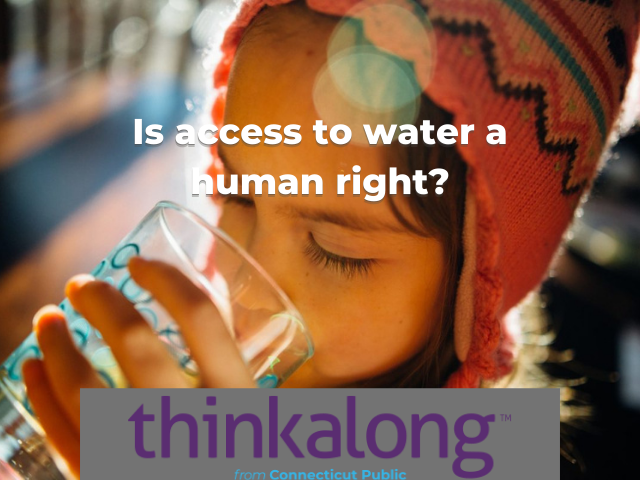
This Teacher's Guide supports the Is access to water a human right? module on thinkalong.org. Here is the full module and below is a summary.
Water covers over two-thirds of the Earth, but only about 1% is drinkable. The UN states that "the human right to water is indispensable for leading a life in human dignity. It is a prerequisite for the realization of other human rights." High profile water crises in the United States - like lead contamination in Flint, MI and Washington D.C., droughts in California, and protests to protect water at the Standing Rock Reservation - have brought forward important conversations about clean, safe water access across the country. As the world focuses on climate change and water scarcity as global issues, many are asking an important question: is access to water a human right?
To use this module with learners in any setting, we recommend using one of the structured discussion formats outlined at thinkalong.org/structuring-discussions. You can find options for a small or large group, so that all students or just a few participate, and examples of some discussion formats.