. Skip to main content
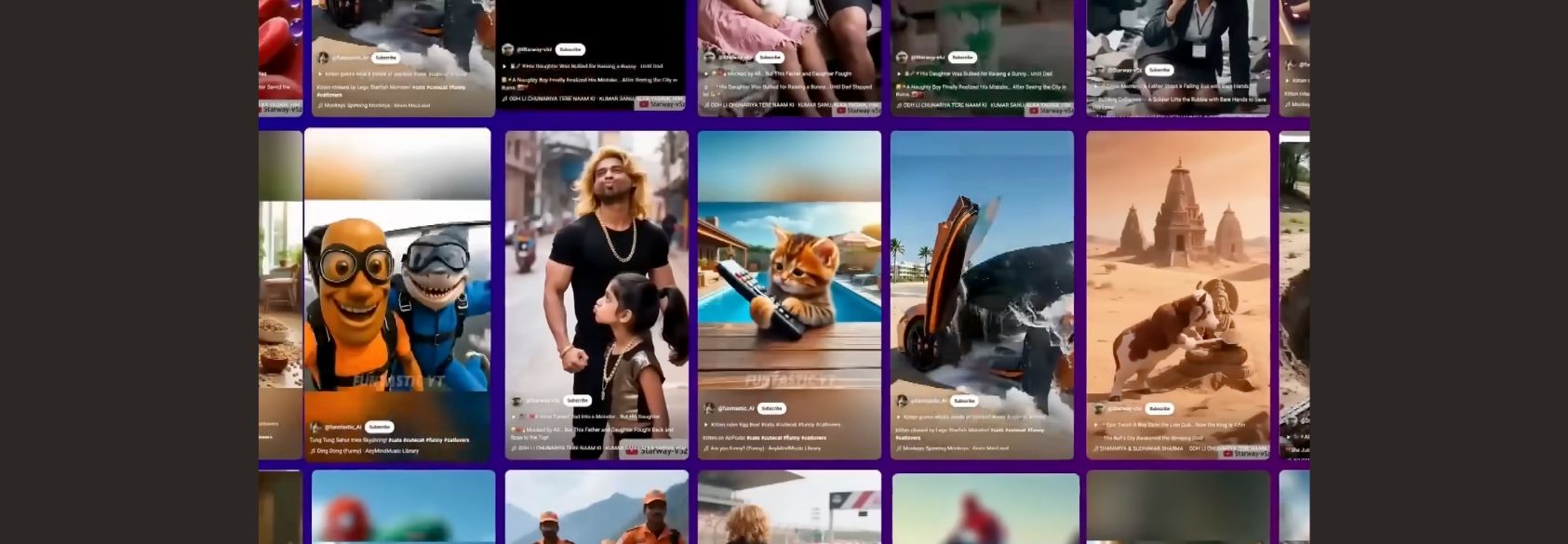
A grid of surreal and AI-generated short video thumbnails featuring cartoon characters, animals, and digitally altered humans. This visual highlights the spread of low-quality, misleading content—also known as "AI slop"—which critics warn may confuse users and contribute to misinformation online.

What Is 'AI Slop' and How Does It Impact Users?

October 29, 2025

What Is 'AI Slop' and How Does It Impact Users?

Can students spot AI-generated misinformation?
Share

Share On Facebook
Share On Twitter
Share On Pinterest
Share On LinkedIn
Email

Warning: This video contains discussion of suicide. We recommend that teachers review the segment before sharing with their students.

Note: If you are short on time, watch the video and complete this See, Think, Wonder activity: What did you notice? What did the story make you think about? What would you want to learn more about?

In the last few years, video and other content created with artificial intelligence have begun to flood almost every part of the internet. It has appeared everywhere from Spotify to the Kindle Store. But on social media, it is almost unavoidable. William Brangham takes a deep dive into the world of "AI slop."

View the transcript of the story.

Remote video URL

Discussion Questions

  1. What is "AI slop" and how is it made?
  2. When did AI first start to become common online?
  3. How has AI changed the media landscape more than other technologies that allowed a person to manipulate video or audio, according to Hany Farid?
  4. Who is making AI slop, and why, according to Max Read?
  5. Why does AI slop affect connections we have with friends and acquaintances, according to Aidan Walker?
  6. Why does it also affect the environment?

Focus Questions

  • How do you know if something you see online was made by AI?
  • How has "AI slop" changed your experience online? Have you managed to avoid AI or AI slop online? If so, how?
  • Hany Farid said, "...there's almost no limits to what [AI] can do other than limits imposed by the A.I. company that says we don't want you creating certain types of content because it's either illegal or harmful."
    • Do you think there should be rules (public policy) or laws that regulate how AI can be used?
  • Media literacy: Why do you think this segment makes a distinction between "AI slop" and other art or music created by professionals using AI tools? Do you think there is a difference, and if so, what makes art generated by AI different from AI slop?

Extension Activity

First, as a class, discuss some of the AI slop you've encountered while online. Can you think of an example of a time you shared AI videos or images with friends or other people you know? Or times your friends have shown videos or images to you? What was it about the AI-generated content that caught your attention?

Next, watch the following video from our partners at the MediaWise Teen Fact-checking Network and Student Reporting Labs (SRL) on spotting AI content. You can also check out the lesson plan for this video here.

As a class, discuss — what do you look for to determine whether or not content is AI-generated?

Remote video URL

Media and Digital Literacy Resources

Foster digital literacy and safety online and explore the algorithmic biases that can cause direct harm to young people online.

Subscribe to Our Newsletter

Want to see more stories like this one? Subscribe to the SML e-newsletter!

Republished with permission from PBS News Hour Classroom.

PBS News Hour Classroom
PBS News Hour Classroom helps teachers and students identify the who, what, where and why-it-matters of the major national and international news stories. The site combines the best of News Hour's reliable, trustworthy news program with lesson plans developed specifically for... See More
Advertisement

Post a comment

Log in or sign up to post a comment.