



About This Webinar
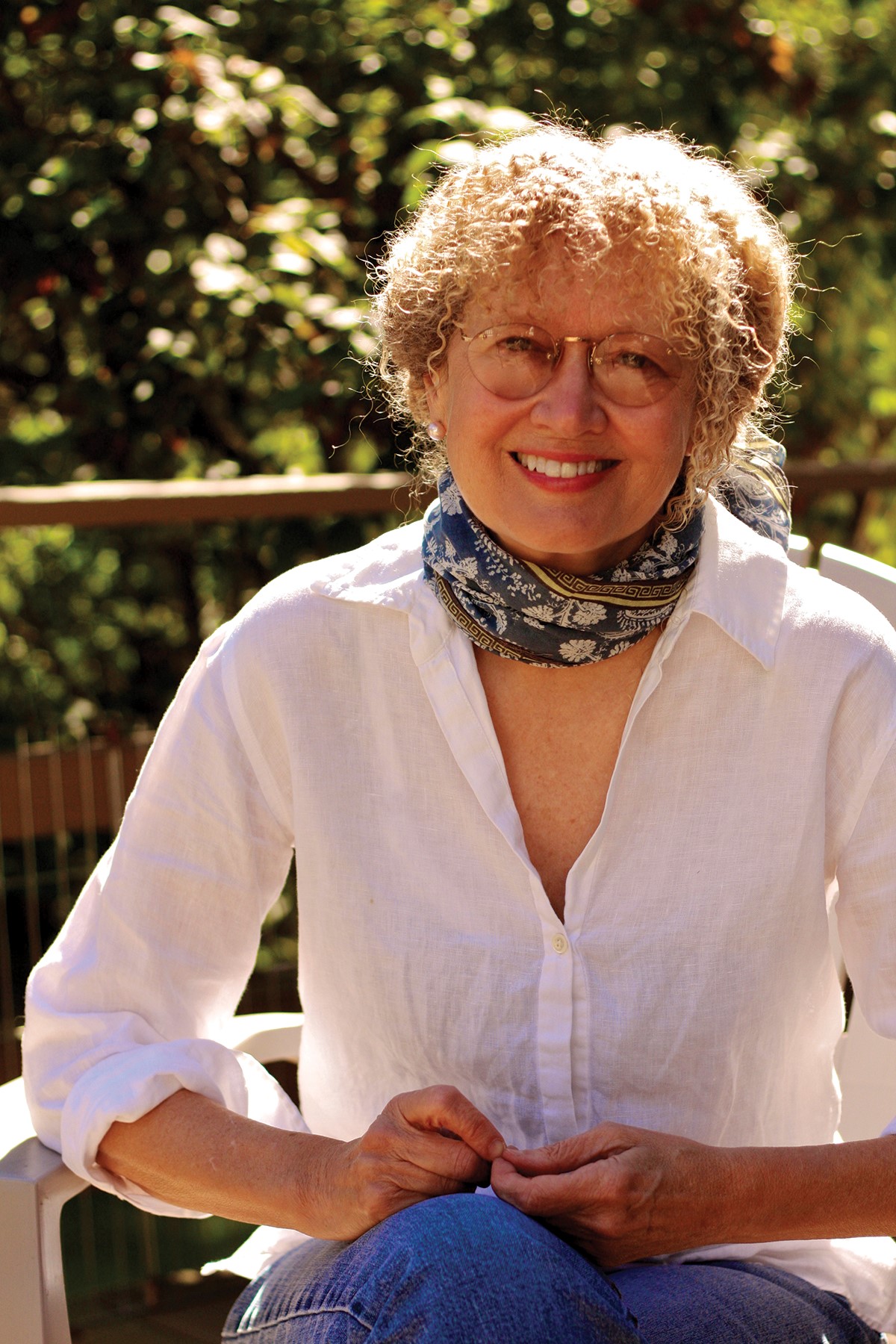
Join us for the Thursday keynote session of the 2025 AFT Share My Lesson Virtual Conference and the March AFT Book Club event, featuring Mary Pope Osborne, author of the beloved Magic Tree House series.
In this conversation, Osborne will share the story behind Magic Tree House—how it started as a four-book series and evolved into a classroom mainstay. She will discuss the role of teachers in shaping her journey, the inspiration she has drawn from their dedication, and how student feedback has influenced her stories over the years.
Osborne will explore how Magic Tree House books have been used to support English learners, gifted students, and students with special needs through high school. She’ll highlight the series’ cross-curricular approach, blending history, science, and literature to engage young readers.
Additionally, Osborne will share insights into her own writing journey—how she got started, the creative process behind her books, and advice for aspiring writers.
Don’t miss this special keynote conversation about the power of books in the classroom and beyond.
This webinar is part of Share My Lesson's 2025 Virtual Conference! View all sessions here.
Learn more about the AFT Book Club.
Missed an AFT Book Club with a favorite author? Access all webinars for free: https://gateway.on24.com/wcc/eh/931978/aft-book-club-series
Transcript from the Keynote
Please note that this transcript was created using AI. There can be mistakes and typos.
Leslie Getzinger:
Hello. On behalf of the AFT and Share My Lesson, I'd like to welcome everyone to today's keynote with Mary Pope Osborne on storytelling, teaching, and the magic of books. My name is Leslie Getzinger, and I'm Deputy Director of the AFT Communications Department. I will be your moderator today. Before we begin, let's watch a short video from today's sponsor.
(Video Start)
Today's webinars are brought to you by High Q. Creativity is the 21st-century skill that few schools teach. High Q is an exciting new company that has figured out how to do that. In addition, High Q helps students find direction, engagement, and ideas. Help students develop creativity with High Q. Welcome to this virtual conference. High Q improves creativity, the 21st-century skill no one teaches. We are pleased to join the American Federation of Teachers Share My Lesson to support teachers, educators, and parents everywhere. To overcome the challenges we face, we need the ideas, spirit, and imagination of all of us committed to better education.
(Video End)
Leslie Getzinger:
OK, now let's do a practice poll question. All of our polls today will pop up on your screen with an audio alert. The question we have here is: How often do you use social media? Please be sure to hit submit to have your answer recorded. While you're answering, I'd like to introduce our wonderful keynote speaker, Mary Pope Osborne.
It is my great honor to introduce Mary. She's a beloved storyteller whose books have ignited the imaginations of millions of young readers. Mary Pope Osborne is best known as the author of the Magic Tree House series, one of the most popular and endearing children's book series of all time. Since the publication of Dinosaurs Before Dark in 1992, Jack and Annie's time-traveling adventures have transported readers across history, cultures, and mythologies, fostering a love of reading and learning in children worldwide.
Over the course of her career, Mary has authored more than 100 books, ranging from picture books to young adult novels, and has been recognized with numerous accolades and awards. Beyond her writing, Mary is a passionate advocate for education and literacy. Through her Classroom Adventures program, she has worked to bring books and resources to students and teachers, ensuring that the magic of reading reaches as many young minds as possible.
Through Mary's Gift of Books program, she has given over 1.2 million books to underserved children across the country. Mary has accomplished this with the help of her longtime partner, First Book. Just recently, the First Book team put together the following video that we'd like to share with you here.
(Video Start)
Narrator/Teacher 1: At our school, we have a large population of children without access to books. These wonderful stories inspire a child to learn, to love to read.
Narrator/Teacher 2: My job as a teacher is not to teach kids to read and answer questions, but ultimately to love picking up a book and enjoy the journey it takes you on. This year my class fell in love with Mary Pope Osborne books. They could not get enough of the historical fiction genre. One child, in particular, read every title in my class library. Based on his recommendations, the rest of the group couldn't wait to read about Jack and Annie's adventures.
Narrator/Teacher 3: Our school, Paradise Elementary School, was destroyed in the Camp Fire on November 8th, 2018. We were relocated to an empty school in Oroville, CA, where we created a school in four short days. Since our school was a total loss, we needed everything, especially books. Having Mary's books back in our classrooms and library gives us a small sense of normal. Everything that was once familiar was lost, and with the books returning that we know and love, we are slowly starting to feel like we're going to make it. We're going to be all right. My students and I are enjoying traveling on this magical journey with Jack and Annie.
Narrator/Teacher 4: My students still need urgent intervention, but their reading scores are rising, their self-esteem is rising.
Narrator/Teacher 5: Our mission is to inspire students to dream, teach them to unite with others, and give them confidence to venture out of their comfort zone so they can achieve their goals. Thank you for such a wonderful gift.
Narrator/Teacher 6: Because ours is a high-poverty district, many of our families cannot afford books. We teachers spend hundreds of dollars of our personal money, but our resources are limited. Our students particularly enjoy Magic Tree House books and look forward to the next book of the series. Mary Pope Osborne's generosity has opened worlds and changed lives. We are so grateful.
(Video End)
Leslie Getzinger:
Alright, thank you. Now we are really excited to welcome Mary Pope Osborne to speak to us. Mary?
Mary Pope Osborne:
Hello. Hello. Nice to be here today talking to teachers, my favorite audience.
Leslie Getzinger:
Well, we're very excited to have you, Mary, and thank you for all the books you've donated and your wonderful partnership with First Book. I'm just going to start it off. Mary, could you tell us a little bit about your work as a children's book author, how you got started, and where Magic Tree House got its start?
Mary Pope Osborne:
Sure. I would say it started in childhood when I was young. I grew up on military bases, and I had a twin brother (still do), a younger brother, and an older sister. Because we moved so much and we were always together from one house to the next, we were each other's best friends. What we did all the time was play make-believe. It was all we did. We seldom watched TV, maybe at night, but all the time our parents, when we weren't in school, were throwing us outside and just letting us roam the world around us.
We had boundaries, but we could take our bikes or go on foot and explore whatever army posts we were living on. We got very close to nature in that process. We were always in the dirt and knees in the grass and up trees. In the summer, capturing lightning bugs and collecting locust shells, very much involved with our environment and pretending all the time that we were somebody else. I know that's where my storytelling started.
When I finally got to high school and I couldn't "play" anymore, I literally started getting into plays. There was a theater near my family. My dad had just retired, and we were in North Carolina. I was walking the block to this theater almost every day after school and appearing in shows and working backstage, getting myself into a world that was just as make-believe as the one I'd created in childhood.
I went into college to study theater, and I changed my major to world religions because I got very interested in other cultures and times and places. After I graduated, I literally put a pack on my back and went overseas. This is in the 70s, so it was pretty amazing then. I could travel with a friend, and we traveled through much of Europe and even into Asia. It took a year. All those travel adventures, which were really on the dime—even stayed in a cave in Crete for six weeks instead of paying for a hotel—we had a wonderful time, except that it just wasn't real life, I'm sad to say.
I came back to the States and lived in Washington, DC. One night I went to the theater, and this handsome actor walked on the stage playing Jesse James, the outlaw. He was playing a guitar, wearing boots and a cowboy hat. I fell in love from the balcony. I had a friend in the show, and I met the actor playing Jesse. I've been married to him now for 48 years. I think our whole life has been around make-believe. He's still Jesse to me. In fact, a friend at a recent anniversary wrote a song called "Will You Marry Me, Jesse James?" for our anniversary.
But Will and I have been great partners. As he was in theater and a writer and a singer and a musician, he inspired me when I moved to New York to live with him, marry him. I would have a day job—a night job, actually—working in restaurants and bars, being a bartender, anything I could do so I could write all day. I would walk around Manhattan. We had a teeny little apartment that you couldn't even... I worked in the closet for a long time. Then I started taking my tablet, my pen around the city.
One day, I started a story about my own childhood when I was 12 and shared that with a friend who was a writer, my only friend I knew who'd ever published a book. She gave it to her agent. They gave it to a publisher. The next thing I knew, they asked if I could rewrite the book and make it longer and deeper. I really had never thought of myself as a serious writer until I was getting this attention. I worked as hard as I could. I rewrote the whole book, and it was published. Then I kept writing.
That was YA, and I wrote four YA novels. That was in the time when the big corporations were not demanding huge royalty earnings from authors to keep publishing them. I was very lucky in that they kept publishing me even though I got nice reviews. They nurtured my career, and I wrote all kinds of things. That's the joy of children's books. I wrote picture books and retellings of mythology and myths and fairy tales, Norse mythology, American tall tales. I wrote mysteries. I just love the form. I love that you could find a form, and then you would have your own content and you could select how to present that to the world of children.
But I wasn't in education at all. I didn't have children. I had never studied teaching or how to deal with children. It was really stuff that I was most interested in that I was writing. But then Random House contacted me and said, "How would you like to do a series?" "We're selecting three authors to start a series. One is Barbara Park to do Junie B. Jones, and Louis Sachar—he'll do Marvin Redpost—and then you, Mary. You can decide what you'd like to write about."
Because I had such wide interests and I love travel and I love different cultures and loved mythology, I decided I wanted to do time travel. I said, how will I get some kids back in time? Well, all the odd things I thought of. I first did a magic cellar. I tried magic whistles. Then I tried writing about a magic artist studio and then a magic museum. None of these were good books, I have to say. I just kept trying and trying.
Meanwhile, I'm kind of thinking I should get back to my other work because I was really enjoying that, and I was planning to write for adults and the theater. We had a little cabin in Pennsylvania, and my husband and I took a walk. We saw a tree house, and it was all falling down. The childhood had long ago left it, I'm sure. Will—I said he's very creative, my husband Will—and we said, what if you have a magic tree house?
Well, that was really interesting to me because it could fly everywhere, not be noticed if it was high in the trees. But how was I going to get it to move? How was it going to be magic? Then I came up with the idea of filling it with books. You would open a book in the Magic Tree House and make a wish, wish you were there, and then your adventure would really start. Some assignment that was sent to you, then you didn't know the source of the person sending it. That's what I came up with.
It had taken a year to write that first little book of Magic Tree House, Dinosaurs Before Dark. I wrote Dinosaurs Before Dark, and the publisher said, "You'll make some decent money on this because we're going to put it in Target and Kmart and Walmart. It's going to be mass market, not a trade book. It won't probably be reviewed. It won't be up for awards. It'll just be huge numbers of them." That was pleasing. I thought, well, if I did that, then I could support my other habit, which was to write more serious work for older readers.
Well, something happened that changed my life. I had never before in my life received letters from any of my readers because I was writing for myself, I'll admit it. I was writing for what I was interested in. But now I had readers. I was getting letters from teachers, and they were telling me that these little books were helping their kids learn to read in first, second, third grade. I got so excited. Then I started getting letters from kids, and that just put me over the moon because I had never before gotten letters from kids.
Then I said, well, maybe I should go to schools. I figured out through a bookseller in Pennsylvania how to present myself as someone who could travel to a school. This is in the 90s. I had a bunch of slides made, and I got some engagements. I would travel by bus or train, sometimes plane, and stay in motels and carry my slides around the country. I went from one school to the next to the next.
What I learned when I went to schools was the magic of education and what teachers were doing. I saw astonishing works. I saw bulletin boards where kids had made covers of Magic Tree House. I saw rainforest displays and shoebox dioramas and storm centers and cave drawings and hieroglyphics and African masks. I saw a special needs classroom where they'd lined up the desks and let the children pretend they were plane seats. They would get a passport and fly somewhere in the world and then have a lunch based on the book the kids had all shared in the classroom.
It was that kind of magic. I was stunned by it, and I fell in love with it. I told my people at Random House, I said, "You guys, you don't know what teachers are doing up there. I'm going to present to you—to my own publisher—what you have." I brought in a big box of letters and pictures, photographs I'd taken, and I began to present what Magic Tree House could be if they just saw what I saw. I even took some editors and marketing people with me to some nearby schools and showed them the enthusiasm from the kids and the teachers.
That really got me going in alignment with my publisher to promote and write these books. Pretty soon, I signed a contract at that time to do 12 more, which was really—I thought I'll never get through 12. I'll never figure out that many stories. Right now, I'm working on the 67th story. This whole adventure has been unbelievable from beginning to end. As I said, the teachers inspired me. I had wonderful illustrators, Sal Murdaca and A.G. Ford.
Then my husband came up with the idea of starting a nonfiction series to go with my fiction, which is now The Magic Tree House Fact Trackers. Will, my husband, and my sister Natalie wrote over, I would say, almost 50 Magic Tree House nonfiction books to go with my fiction. I was the only one who wrote the fiction, but their books would be companions to my books. If I went to the time of Dinosaurs, they would write all about the facts of dinosaurs, and on and on. We're all working in our separate lanes but having a wonderful time and sometimes traveling together to schools and bookstores around the country. Will and I did a book tour in Europe and a lot of countries. We went to Japan twice because these were places where the kids were really enjoying the books.
What was really happening was that just unwittingly, in the beginning, I was helping kids learn to read. I was learning the huge job that teachers have of teaching kids to read and the magic of that, and how special it is when you can get a child to cross the threshold into the world of reading. There's a wonderful passage I wanted to share because I don't think anything in the world has ever taught me more about the magic of reading. It's from Betty Smith in the book A Tree Grows in Brooklyn. She's the character Francie. In real life, it is herself, but she fictionalizes herself.
"For quite a while, Francie had been spelling out letters, sounding them, and then putting the sounds together to mean a word. But one day she looked at a page, and the word 'mouse' had instantaneous meaning. She looked at the word, and the picture of a gray mouse scampered through her mind. She looked further, and when she saw 'horse' she heard him pawing the ground, and saw the sun glint on his glossy coat. The word 'running' hit her suddenly and she breathed hard, as though running herself. The barrier between the individual sound of each letter and the whole meaning of the word was removed, and the printed word meant a thing at one quick glance. She read a few pages rapidly and almost became ill with excitement. She wanted to shout it out. She could read! She could read!"
That's true. That's the magic that I see over and over again. I don't want to sound so proud of my mission because what I received back from kids way outweighs what I give them. For me, there's no greater joy than having an audience of six- to 10-year-olds. They're old enough to be individuals, but they're young enough to have this amazing innocence. They haven't gotten into their phones. They haven't gotten into social media or peer pressure. They're so open to learning, and they're so respectful toward adults and authors who give them books.
All the classrooms I've been to around the world have had the same kind of openness and joyful anticipation of reading a book. I've met amazing kids. I've been to classrooms in New Orleans after Katrina. I was in Japan right after the tsunami, touring the tsunami area in northern Japan. I was in downtown Manhattan right after 9/11, talking to kids who had actually seen the planes fly into the buildings. I've talked to orphans in the Dave Thomas Foundation and Make-A-Wish Foundation. I've talked to kids who have cancer.
Over the years, I've really had wonderful encounters with kids whose special needs—deafness, even. I went to a deaf school, and the kids were so wonderful and warm. I've met a lot of kids who had no books in their homes, in their neighborhoods, hardly in their schools. I've been to lots of schools with no libraries. I've also met wonderful kids who come from good homes and a lot of privilege. But I find that all these kids have that same kind of innocence and joy about using their imaginations.
For this reason and because of all the teachers I've met, for the 20th anniversary of the series, which was a little more than 10 years ago, I started the Magic Tree House Classroom Adventures program. It's run by a wonderful director named Cindy Mill. This program is free of charge. I wanted to give teachers the gift of time so that they wouldn't have to do a ton of work. If they have the books in the classroom they want to share, we have a curriculum guide, we have a reading level guide for all the books, and whole life lessons about what teachers can talk to kids about once they've read one of the books. Lots of information is on this site. It's Magic Tree House Classroom Adventures. If you just Google that, you'll find it. The whole purpose is to make learning fun and to make reading inviting and exciting.
We also started the Magic Tree House plays. Teachers said that kids would like to perform Jack and Annie stories in their classrooms. So my husband Will from the theater, our best friend Randy who's a composer who was a lot Off-Broadway, and his wife, an award-winning playwright Ginny Laird—the three of them have written more than eight Magic Tree House musicals that are done all over the country. I just sit back, and they invite me into the theater, and I get to see a musical of one of Jack and Annie's adventures. It's as joyful for me and surprising as I hope it is for the kids. That's really pretty special. With my sister, my husband, and our best friends working on the series, it's a little—it feels like it comes out of our kitchen up here in Western Massachusetts.
Anyway, if you look at Magic Tree House On Stage online, you'll see all the different shows. Also, for a great number of the shows, you can get a kit from Music Theatre International that'll provide you with everything you need. You have to pay for it. It's not hugely expensive, fortunately, to put on a show in your own school, community center, or after-school program. You get the kids performing for other kids. Sometimes it's going to be the only time they ever get on a stage and perform in their lives, but it'll introduce them to the joy of that realm of the imagination.
There's also, I want to tell you, a great Magic Tree House website with Random House. It's a teacher site. It has a lot of wonderful things that will inspire your work in the classroom. Between us and Random House, we have lesson plans for every single book. I should make clear for those of you aren't familiar with it, that there are two tiers of Magic Tree House. There are the regular ones—there are 40 of those—with a first-, second-grade reading level. Then we jump up to another tier, and I call those the Magic Tree House Merlin Missions. They're twice as long as those first books, and they're a little harder vocabulary and reading, but that's what kids can grow into.
Then there's the nonfiction, which accompanies books from both those areas. Now we have the Magic Tree House graphic novels. Those are adapted by my friend Jenny Laird, who lives down the block. They're done by art—the art is done by two astonishing twin sisters in Washington state, Nicole and Kelly Matthews. Nicole and Kelly get this adapted story of the whole first line of books from Jenny, and then they begin to do the art. As you can see on the screen, the first one to come out is this spring. It's a nonfiction. The first fiction that came out and is beautiful is the Dinosaurs Before Dark book. But now, a few years later, the nonfiction—I'm sorry, I'm trying to show this in the screen—the nonfiction book is going to accompany the fiction.
At first, when Random House said, "Would you like to do graphic novels?" I was resistant. I thought, well, no, I want kids to read the whole books. But then I did my research, and I found out—teachers told me this too—that a lot of reluctant readers can get into reading with the graphics. Once I knew that was proof in the educational way, I said fine. Now we have, I would say, eight out and a few more coming in process. Those—that's another exciting adventure.
The First Book organization has partnered with me to help get books to classrooms, especially in underserved areas. That's been a fantastic partnership. We work together; they deliver the books, and we put the orders in for the books. We get grant proposals on our website. Teachers of Title 1 schools can submit their ideas for how they would use the books in their classrooms. If they're selected, then we can send that classroom—like if you want the first four for every child, we can take care of that for the most part.
We've had wonderful partnerships doing our plays, musicals, at different cities around the country and given books to all the kids who see the play. Like in Chicago, we did our musical based on the Magic Tree House book on Shakespeare, Stage Fright on a Summer Night. All the second graders in Chicago got a copy of the Shakespeare book, and the play was piped into all their schools because probably only 1,000 actually came to the theater in Chicago to see the show. We did the same with a play about a musical and Jackie Robinson in Orlando, I think it was last winter, where all the kids got the Jackie Robinson Magic Tree House A Big Day for Baseball. Then they got the show they could plug into, see the whole musical, and learn. What they're always learning is how you adapt from one form to the next.
I've just had a fabulous time. I feel like I'm the luckiest person in the world, and I love everything I do. I get the best letters you've ever read. I will read you three short lines from letters so you see how wonderful my life is.
"I like your book because it almost made me smart."
"Like that one."
"And they try to raise my self-esteem a lot."
"Your books are the best in the whole entire world. You are a star."
"Yes, you are a genius of tomorrow," one person wrote.
"If you keep making these books, I will keep reading them. I hope this inspires you to be a better writer."
And a recent one I got, this is one of my favorites. I will share this one. "I may be interested in reading your books. Our classroom has a lot of your books. I haven't read your books yet, but maybe I will." And he signed it, "I'm your biggest fan."
So it's magic. It's just—I have a wonderful time with educators and kids and my family and friends and loved ones who helped me with the series. That's really what I came to say. I do want to say that we have a special giveaway to Title 1 educators in conjunction with this conference that everyone is attending. If you have a Title 1 school in your life, you're eligible for First Book, and I will give you the opportunity to receive $75.00 to spend on the First Book marketplace on your favorite Magic Tree House books.
Also, I want to read this to you. I want to add that Magic Tree House is proud to have a new page on the Share My Lesson website where teachers can get resources from our Classroom Adventures site. Now I think I'll hand it over to Leslie to get some questions, and we'll give you some answers about what's coming down the pike with Magic Tree House and what I'm working on now.
Leslie Getzinger:
Thank you so much, Mary. That's wonderful. Thank you for all that information and thank you for the generous donation as well to the participants of this webinar and the Share My Lesson conference. I know your books are really loved. I have to say I have a whole stack of them right here. We have AFT, and we've been very lucky to give out many of your books at a lot of the events that we've done as well. We have lots of questions in here.
I think we just did a poll that just went out and that people answered. So I'm going to go straight to the Q&A from Ashley Thompson. She would like to know if you have a favorite—I'm going to combine two of Ashley's questions—Do you have a favorite Magic Tree House book? And also she wanted to know how many countries are your books published in?
Mary Pope Osborne:
Oh, well, the second question is really fun to answer. As far as I know right now, in about 36 languages, but that covers 100 countries. It's really around the world, and that speaks well of the world in terms of children because there are kids out there who love adventure and love to learn. My heart is so warmed. I've been to events where we had representatives from different countries to the Bologna Book Fair, and it was like a little UN with each book publisher standing up to say how they use the books in their country. Yeah, that's a great bonus of this.
My favorite book? It's just like telling your favorite child. I almost always love the book I'm working on at the moment the most because I'm so wholeheartedly involved with the characters and the setting. I'll tell you a book that's coming out in the spring. I have a piece of paper that shows the cover, but I'm going to try this again. This counterintuitive... There's the cover. Jack and Annie go to Monterey, CA, and have an adventure with sea otters. I would say up until recently this was the one closest to my heart.
But now I'm working on a book about a girl in England in 1812 who was only 12 years old. She had a horrible, hard life. All her siblings had died, her father had died. Their mother and her were going to be sent to the poor house. She would go to the coast every day and have a little hammer and hit the cliffs and discover fossils. She ended up being the greatest fossil finder of all time, and her name was Mary Anning. Jack and Annie are going to have this great adventure with her. Everything about her in the book that I wrote is true, where she finds the first sea reptile that was like 17 feet long. She found the bones of it that were fossilized, and that was the beginning of her stardom in that world. Anyway, I love talking about the different subjects because they're so exciting.
Leslie Getzinger:
Well, here is sort of a follow-up question from Lindsay. She says, "My son would like to know which Magic Tree House book is your least favorite?"
Mary Pope Osborne:
No, no, you're telling me not to like one of my children. I can't do that. The truth is some are harder to write than others, but not one is coming to mind that really annoyed me. Oh, I should say my favorite one of all time because it was the hardest one to write. It took a whole year to write it. It's a super edition that's not even in either category I told you; this is for more middle grade. It's called World at War, 1944, and it's about Jack and Annie going to Europe and helping the French resistance, if you can believe it. I know one reviewer said if Jack and Annie can fight the Nazis, they can do anything. It works. Somehow, weirdly, it works. But that took the hardest work I've ever done. It was so gratifying.
Leslie Getzinger:
Well, that's good. Well, that kind of leads us to another question from Jennifer, who'd like to know what advice would you give to young writers who want to use their imagination to write stories of their own?
Mary Pope Osborne:
Oh, wonderful advice. You're so lucky, Jennifer, because when I was growing up, we didn't really write stories. No authors ever came to our schools. It was just unknown that we could write a story. So you're way ahead of where I was when I was your age, whatever that is. I feel like the best tips I can give would involve rewrite, rewrite, rewrite because that's the secret of my work. When I'm working on a Magic Tree House book, seriously—and I do work on a laptop; I don't think I could do this if I were working by hand like I did in the beginning—I may rewrite 30 times because I'm going over and over it, simplifying it, mostly simplifying it so it can hit my readers but not lose the depth of the story. But I have such a good time doing that.
Then the other thing is take breaks. If you get stuck—this is kind of folklore that every writer knows—get stuck, don't keep trying to fix the problem or figure out what to do. Take a break. Go have some tea, walk your dog, read a little, whatever you can do to break that eddy. Like you're in this whirlpool. When you come back, so often your unconscious has been working on the problem, and it's there, it's solved. It's kind of wonderful. That's when you feel that it's more than just ourselves writing; something comes through us because you've unblocked the muse, so to speak.
Then the third thing is have fun. If you're not having fun, like intense curiosity about what you're doing, you might need to stop and rethink. Is this the story I want to tell? Because the real secret is wanting to sit down and work and not call it work, call it play, just like we did when we were kids and went outside.
Leslie Getzinger:
Yep, good advice, very good advice. A lot of questions coming in. We're going to put the First Book link that's up for people that are asking for it in the chat, I think in just a couple minutes. But Amanda asked if there are any plans for a TV show. "I love the book so much. Tyson and I listen to your books every night on an audiobook for bedtime. We love listening. We love using your books in our lessons as well."
Mary Pope Osborne:
Oh yeah, I forgot to mention we have audiobooks that I narrate. That's a wonderful adventure too. The TV... We have had many starts down that road over the many years, and we turned around and ran away. I think we ran away because we didn't want to lose our vision. People would wine and dine us and then want to take it away. I didn't want to pass it on to people where we weren't involved, my little team up here.
But then this wonderful group contacted us from LA, and they are working with us totally as partners. We've been working with them for about a year. That's all I'll say at this point. But this has been a great extension of the sort of workshop we have in our lives where things don't—we don't lose connection to what we're doing, and we can approve and think that it represents what kids want to see through all our experiences. I'm saying "our"—my husband and myself, and then our friends who write the plays are also involved in putting together the potential TV show. So to be seen later, maybe, hopefully.
Leslie Getzinger:
Very, very good. OK, so another question for you. John asks, "With AI technology coming at us in full force, do you ever use it to assist you now with your books?"
Mary Pope Osborne:
No, John, I have never used AI. I don't know how to use AI. I think I get enough, though, from the Internet just by looking at sources. Then of course, I order a whole library for every subject. I much prefer working from real books. That's the way it's always been. I have shelves of books about sea otters and books about rhinos and books about—this is what I did last time—Mongolia. I really like working with physical books. But on the Internet, I can find information from aquariums and zoos. It's amazing; you can find anything. In the beginning, I couldn't find anything anywhere. I would literally walk the streets of New York and go into every library they had and look for information.
I remember the saber-tooth book, Sunset of the Saber-Tooth. I found great information in an unknown library at the Museum of Natural History in New York. I also talked to consultants. All the nonfiction books have an expert who reviews every word. We have a lot of help. I feel like I'm staying away from AI as much as I can. I just feel it's too disembodied for my interest.
Leslie Getzinger:
Well, you sort of answered Selena's question. Selena was asking where do you get your information from—a book or your sources about the topic or era that you are writing about? So you sort of answered that one. Then this one just came in from Lindsay: "My daughter would like to know, what do you love most about Jack and Annie?"
Mary Pope Osborne:
I love Jack and Annie so much. I don't even think of them as characters I created. Once I got them, they started creating themselves. Sometimes I'll think to myself, oh, I'd like to try this and see how Jack and Annie react. Like I'm waiting to see how—that's what happens in fiction writing. Your characters take over, and that's the thrill of it. If you don't have that thrill, then move on to something else. I want to know how they're going to respond to a sea monster or helping the child who's hurt or whatever, and who's going to take what role.
Jack and Annie are different, but they're like—I have a twin brother, and we're very different, but together we kind of make up a whole. Jack's very cautious and thoughtful and academic, and Annie's very spontaneous and rushes into things. Between them, they grow more like the other. They grow more whole. Knowing them all these years—and that's why I'm so protective of them in terms of media because I don't want others to tell me who they are. I want them to tell me who they are, and me give that out. I love Jack and Annie. They're very close to me. I think if I was told you can't write any more of these books, I'd secretly have meetings with Jack and Annie just because they feel that real to me.
Leslie Getzinger:
Well, and then another question here: How do you feel that Magic Tree House books work well with ELL students, with gifted and talented students, and with students with learning disabilities?
Mary Pope Osborne:
Great question. Yeah, it's used a lot with English as a second language. In one of our productions, a young actress in Newark had learned—she was from Russia—and she had learned English on Magic Tree House books. She got to play Annie, and she was spectacular. They're used with adults in ESL programs, and then they're used also with kids on the autism spectrum because there's a certain comfort in the repetitive format of the books. I know when I go to bookstores and schools, those kids can be so enthusiastic and have shared the books in their family. I find that really joyful.
Then the gifted and talented, they can go up to the Merlin Missions or the Super Edition. There's a range there that they can draw from. They're not just in the basic reading level of the first books. Definitely, the nonfiction would figure into the reading of the gifted and talented and hopefully inspire them to do nonfiction themselves—to research and write their own story about, tell the class about butterflies or how an airplane flies.
I love this idea I saw in one school where a teacher let each child learn the way they learned the best. They each took a different Magic Tree House book to tell the class about the subject of the book, but they did their own research. It might have been watching TV to get a documentary. It might have been the Internet. It might have been reading a book, might have been talking to an expert. One boy who practically couldn't read made a space station around the moon book. The teacher said it was the first time he was fully engaged in the classroom, using Play-Doh to make a space station. I love that range of possibility with the way we can educate kids at different levels.
Leslie Getzinger:
That's wonderful. Yeah. In fact, one teacher in the chat said that she teaches at a school for the deaf and that she uses your books and that the kids love your books very, very much.
So just a real quick plug for First Book because I see a lot of comments about First Book in the chat. I just want to say that the AFT has had a very long-term partnership with First Book, as Mary has as well. Mary has given out an amazing 1.2 million books through her program. But First Book, just to say, is a wonderful resource. I encourage everyone who works in a Title 1 or a Title 1 eligible school or program—or if you are not an educator, if you're a health professional, any federally funded health clinic, if you're a public employee, any program that you're working with that has 70% or more families from low income—can work with First Book.
What First Book does is they work with publishers to receive books at 50% to 90% off the retail costs of the books that they stock on what's called the First Book Marketplace. But then First Book also has these wonderful relationships with authors like Mary, with philanthropies, with corporate funders to try to provide more grant opportunities and other opportunities to get books into the hands of Title 1 educators. If you register with First Book—I swear, I'm not a paid spokesperson for First Book, but they're just a wonderful partner with us at the AFT. We've distributed about 10 million books over the last 13 years through our partnership with First Book, and we hope to give out another 10 million more, hopefully.
We have these events with our locals around the country and distribute—we have large distributions, we have small distributions. It's so inspiring to see these people coming out—families, educators, students—to get books for their classroom or books for their home libraries. First Book's just been a great partner to do that. Sorry for the quick little PSA there, everybody.
We have a couple more questions coming in. Karen asks, how do you believe your books can help with reinforcing diversity and help reduce bullying, if you think that your books play a role in kind of helping with that at all?
Mary Pope Osborne:
Well, I would say the signature quality of Jack and Annie is kindness, openness, and learning from others. They go on their missions and get more than they give, which is important to me. They're not going there just helping everybody; they're going and being helped most of the time because they get caught in earthquakes and tsunamis. It's amazing the number of disasters I have with Magic Tree House.
But also with diversity, I've had a great time because that's the signature of the series with Jack and Annie. I've been all over the world. We have books that take place in Japan and China and India, Ecuador, indigenous people in America—the Lakota, the Wampanoag—and they meet Aborigines and Maori and Mayans and Incans. On the nonfiction, we have a book that features Martin Luther King and Harriet Tubman. Then I wrote a book about Jack and Annie meeting Louis Armstrong when he's only 14 in New Orleans. They learn about early jazz. We have a wonderful musical with New Orleans great Alan Toussaint, who wrote the music with my husband called Treehouse Jazz. Then Jackie Robinson was, like I said, the recent show to go with the book A Big Day for Baseball.
It's just really a globe. If you just get a globe and point to it or a world map, we can show the diversity of cultures and places. What I just enjoyed doing was four books about people around the world helping to save animals. They go to South Africa in Rhinos at Recess and meet African Rangers who are really risking their lives to save the rhinos from poachers. Then they go to Ecuador, to the Galapagos Islands, and work with Ecuadorians who are saving giant tortoises on a volcano, which actually is based on the true story where they helicoptered and airlifted these giant rare tortoises off of a volcano mountain.
Then I did Mongolia with the indigenous peoples of Mongolia. Forty percent of Mongolians are nomads. Jack and Annie stay with a nomad family and learn about—oh, it's a great story. I learned about that. They brought back these little rare horses that came from Mongolia for hundreds of thousands of years, but they became extinct. But there were several left in zoos around the world. Jack and Annie arrive on the actual day, 1992 in June, when they're bringing 15 of these horses back so the Mongolians can take care of them in a big range reserve that they've just constructed for the horses. Now they have 600 horses back in their own homeland. I love doing that. I love showing what people are doing in other countries, cultures that are positive and in connection with our goals here, really, with protecting the environment and animals.
Leslie Getzinger:
That is wonderful. That is wonderful. And is that Mongolian horse? Was that something—I remember seeing it at the National Zoo in DC. Is that Przewalski's? Yes, or something like that.
Mary Pope Osborne:
Yeah, that's the name Przewalski's, but the Polish man who first discovered it from Europe was named that. But it shouldn't have been named that, in my opinion. The Mongolians call it the Taki. So I called it the Taki, TAKHI. And that's one—well, I have... Do I have it here? No, it's Windy Night with Wild Horses. That is one of my most recent favorites too, because I loved the lifestyle of the nomads. I think I have a bit of nomad in myself, so that was really a joy to find out about.
Leslie Getzinger:
Very cool. OK, so here is a question a little bit... This is from Bill from Read Aloud Chattanooga. He asks if you knew the late Jim Trelease, who wrote, I believe, the Read-Aloud Handbook. And how well, if you knew him, did you know him?
Mary Pope Osborne:
Oh, I did meet Jim, but it must have been at a conference years ago, and then lost touch. I've met so many people in the world of children's books. Especially because I lived in New York City for 25 years, and I traveled all the time to conferences and schools. But then we kind of slipped up to New England, and I don't go in the city very much, and I don't go to conferences anymore. Now it's kind of wonderful because, I have to say, the only positive about the COVID thing was that we could learn to communicate by Zoom with schools and people. Now I'm very happy to do Zooms. But no, I can't tell you any more about Jim Trelease. I wish I could.
Leslie Getzinger:
Well, the last question is for you, Mary, before we end up here. Is there anything else about Magic Tree House or being a children's author or about the collaborative programs that you have, like the Classroom Adventures program or any of your other programming? The last word is yours.
Mary Pope Osborne:
Well, thank you. The book I'm working on now about the girl Mary Anning in England is the first of a little spinoff that we're putting together called Magic Tree House History Heroes. My goal—and right now I'm scheduled to do four—Mary is a child who had great disadvantages, and with a lot of spunk and gumption and determination, she made so much of herself. I'm really giving serious thought to who the next person should be. Always open to suggestions, which you could put on the Magic Tree House Classroom Adventures program. Send me a note.
But I'm thinking seriously—I haven't done somebody with special needs as a main character—so I'm thinking of Louis Braille, who created the Braille alphabet in France when he was 15 years old in the 1700s. It's the same thing they use today with Braille. Didn't change that much. I'm always throwing a line ahead. The one disadvantage of not traveling is I'm always getting people to vote on my ideas and vote on my titles and vote on my covers. I used to do that all the time throughout the country. Now I'm just hoping for the best that this is a subtopic somebody would really enjoy finding out about.
Leslie Getzinger:
Awesome. Well, I would love to see that about the Braille and maybe a book in Braille. That would be kind of fun.
Mary Pope Osborne:
I think Magic Tree House is in Braille. I think I did get that notice. Yeah. That would be so satisfying. I'm pretty sure it is.
Leslie Getzinger:
That is great. Well, Mary, I just want to say thank you so much for all this information and for doing the whole Magic Tree House series. I hope you do it for a very long time, and there are another 67 books coming.
Mary Pope Osborne:
Thanks, Leslie. Enjoyed it so much. Thank you to this platform. It was wonderful to talk to teachers. Just wonderful.
Leslie Getzinger:
Yeah, yeah. You took the words right out of my mouth. I just want to thank all of our attendees for coming and joining us. To the attendees, please take a moment to download your PD certificate and rate and review this webinar on Share My Lesson. Your feedback is very important to the Share My Lesson team, and it helps them determine what to do for future webinar offerings.
Also, one last thing: registration is open for the AFT Teach Conference 2025. There are going to be more than 70 workshops on lots of topics. I'm sure the topic of AI will come up. I'm sure the topic of many things will come up that educators are facing today. You can learn more at aft.org/teach. I hope everybody has a wonderful rest of their evening. Thank you all for joining us. Thank you.


Love the Tree House series! SO great to hear from the author herself.