

About This Lesson
Activity Time: 30 minutes
Apps / EdTech Tools: CleverBooks Augmented Classroom (ARC Geography App)
Lesson Overview
- In this lesson, students explore animals from around the world and the environments they live in. Using augmented reality, they see different continents and discover which animals inhabit them, sparking curiosity about biodiversity and the relationship between living things and their habitats.
Learning Objectives
By the end of the lesson, students will be able to:
- Identify at least one animal native to each continent explored.
- Match animals with their correct habitats (e.g., polar bears in the Arctic, kangaroos in Australia).
- Share observations about why animals live where they do.
Lesson Activities
Exploration and Discovery
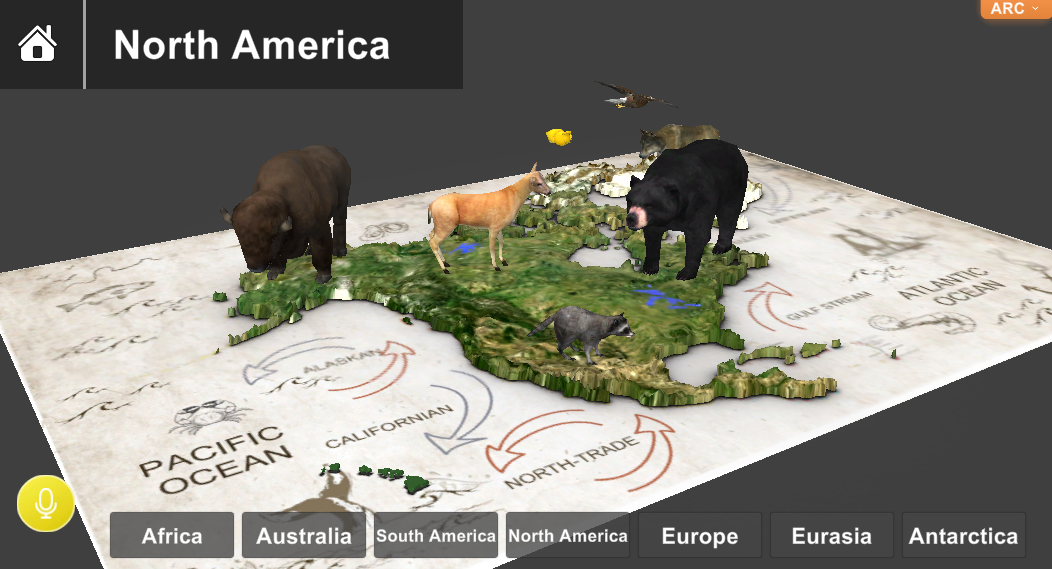
- The teacher projects pre-designed AR content from the ARC Geography app, showing the map with 3D animal appearing on different continents (e.g., elephants in Africa, pandas in Asia, kangaroos in Australia).
- Together, the class discusses what they see, and the teacher asks guiding questions like:
- “What kind of place does this animal need to live?”
- “Why do you think this animal lives here and not somewhere else?”
Sorting Out – Matching Animals and Habitats
- As a class, create a simple T-chart (Animals / Habitats). Students volunteer to place an animal in the correct column (e.g., “Penguin → cold, icy places” or “Camel → hot desert”).
- Encourage connections: “How is a camel’s body different from a penguin’s? How does that help them live where they do?”
Reflection and Sharing
- Students draw their favorite animal from the lesson and illustrate its habitat.
- With support, they label their drawing with one word describing the habitat (e.g., “desert,” “forest,” “ice”).
- Volunteers share their drawings with the class, explaining why their animal belongs in that habitat.
Assessment
- Observation: Monitor how students interact with the AR content—are they correctly locating animals and naming habitats?
- Participation: Look for active contributions to the T-chart and group discussion.
- Reflection Work: Review drawings and labels for correct animal–habitat connections.
Resources
- ARC Geography App (CleverBooks)
- Tablets or devices with app installed
- Chart paper/whiteboard for T-chart
- Paper and crayons/markers for reflection drawings