



About This Lesson
Why Teach About the War in Ukraine?
University of Michigan’s free teaching materials examine the conflict and broader issues of war crimes, human rights, and international justice
The war in Ukraine is one of the most pressing geopolitical issues of our time with broad implications for global democracy and human rights. In order to educate students and the public about this vital subject, the Weiser Center for Europe and Eurasia (WCEE) at the University of Michigan has created free teaching resources for use in both high schools and universities across a wide range of disciplines.
WCEE created an interactive and inquiry-driven high school teaching guide and textbook, developed together with the Center for Education Design, Evaluation, and Research (CEDER) at U-M. The resources satisfy multiple high social studies standards in World and U.S. History and were piloted in Michigan classrooms with high praise from teachers.
The textbook is organized into four thematic lessons:
1) The War in Ukraine: Historical Context
2) What are War Crimes? What Does Justice Look Like?
3) Looking for Patterns of War Crimes
4) Incident Case Studies
Building upon this, WCEE recently released a Higher Education Guide that provides a framework for examining the war as it relates to broad issues such as human rights, political sovereignty, democracy, international law, geo-political conflict, nationalism, and/or historical narratives. The guide offers recommendations on how to integrate the high school resources into college-level courses in the social sciences, humanities, and law through discussion questions and assignments to deepen students' understanding of the conflict’s complexities and global significance.
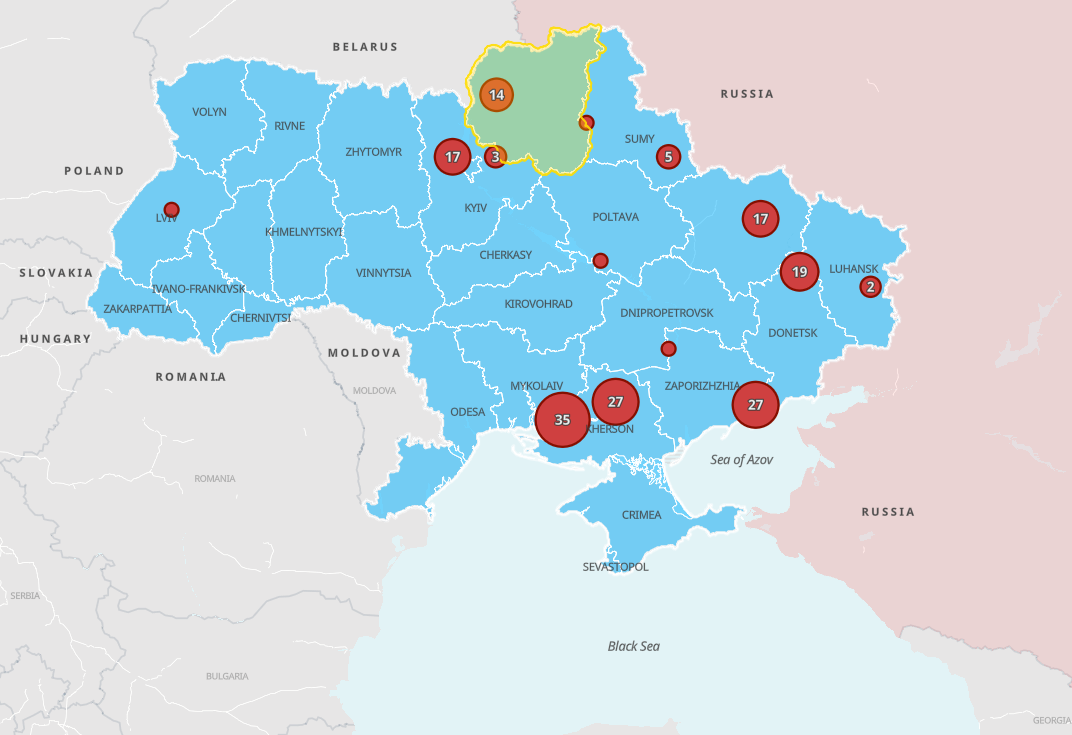
All curricular materials are used in conjunction with WCEE’s interactive maps and archive of witness testimonies of war crimes collected by The Reckoning Project, an international NGO that works closely with Ukraine’s General Prosecutor and international legal bodies to seek justice for victims.