



About This Lesson
Thinkalong.org is a free, evidence-based interactive tool for students to develop media literacy skills by applying the 5 Key Questions of Media Literacy to public media content. Importantly, the tool does not require registration for teachers or students, abides by student privacy laws, and is advised by a board of both youth and educators.
Each module consists of:
-
a compelling and timely question;
-
related current and age-appropriate public media content including audio, video, and text;
-
extension resources for advanced or highly-interested students;
-
student graphic organizers;
-
a simple debate tool;
-
a teacher's guide to the module;
-
and a guide to the 5 Key Questions of Media Literacy.
This Teacher's Guide supports the Should maps be considered works of art? module on thinkalong.org. Here is the full module and below is a summary.
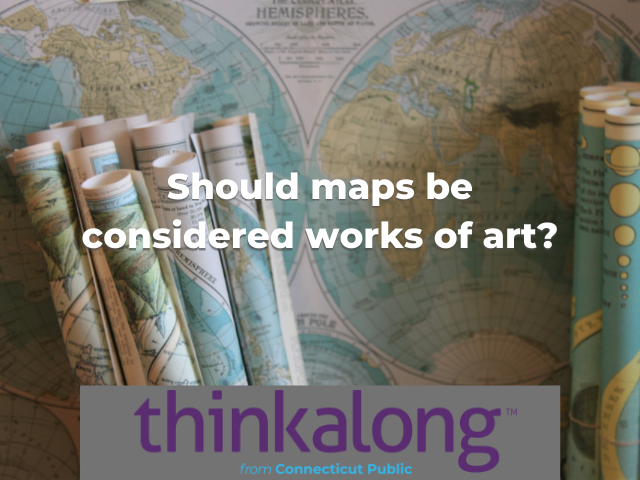
Maps are everywhere. World maps hang on classroom walls, road map apps help us navigate our cars, star maps let us decipher the night skies, and maps of the brain allow us to investigate neural pathways. We rely on maps to communicate facts. But what then does it mean if a map needs to be changed or corrected? And what about less common forms of maps, like a map of a city’s smells or a map identifying handicap accessible buildings? A map’s creator must choose what information to include and what to exclude. As a result, maps can represent different points of view, aspects of reality, or time periods. Given all these possibilities, should maps be considered objective documents of fact or subjective works of art?
To use this module with learners in any setting, we recommend using one of the structured discussion formats outlined at thinkalong.org/structuring-discussions. You can find options for a small or large group, so that all students or just a few participate, and examples of some discussion formats.