. Skip to main content
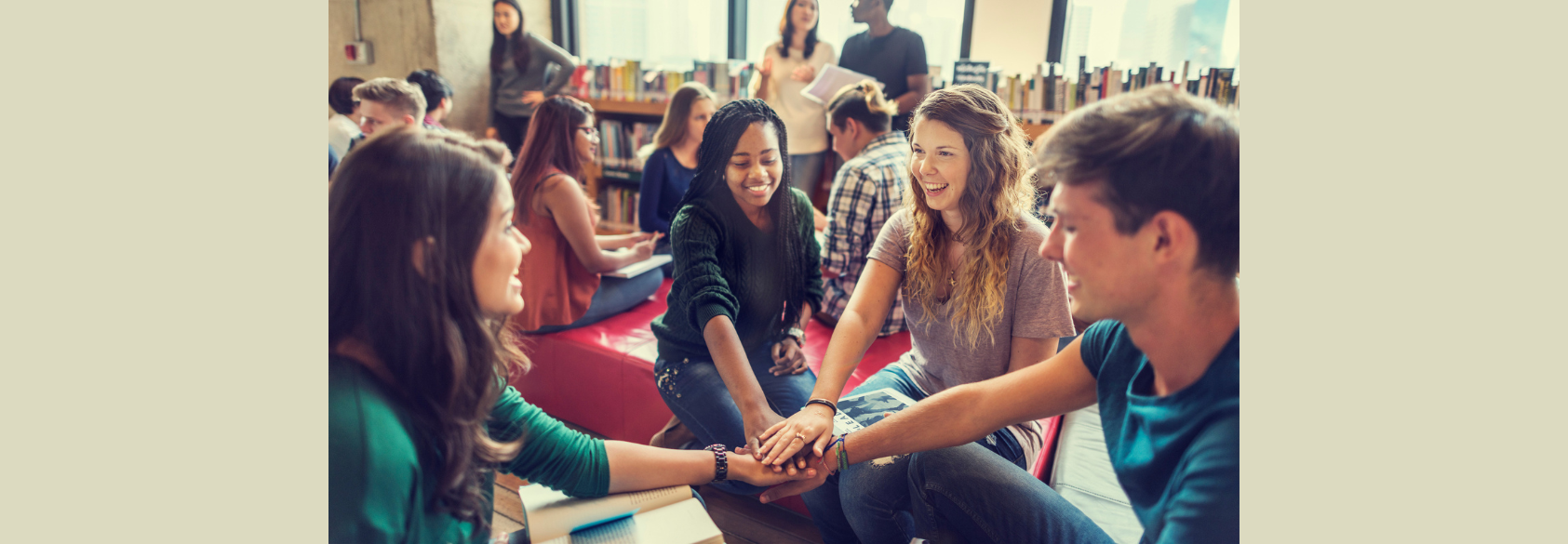
A diverse group of students sitting together in a library, smiling and stacking their hands in the center as a gesture of teamwork and unity, with books and other students visible in the background.

This Community Isn’t Going to Build Itself

October 28, 2025

This Community Isn’t Going to Build Itself

Discover how educators can rebuild authentic classroom connections and foster belonging in today’s digital age. In her latest blog, Amber Chandler shares practical strategies for creating inclusive, student-centered learning communities.

Share

Share On Facebook
Share On Twitter
Share On Pinterest
Share On LinkedIn
Email

Yesterday, I saw “it” for the first time. “It” was the listing for my newest book, coming out in March. From May until August, I wrote a book unlike any of my others—it is longer, not just for teachers, and it includes interviews with amazing thinkers. I’m not going to name them here, but starting next month I’m going to spotlight the fascinating people who were willing to talk to me about my burning question: How can we reclaim connection in this scared new world we live in? As it turns out, it is both a simple and complicated answer. We’ll save the complicated part for the book, but the simple answer is this: To reclaim connection, we must intentionally nurture belonging. Belonging is such a fraught word, right? Do you think that anyone doesn’t want to belong? Of course we all do! Then why is it so hard to admit our need for it? I hope this blog sparks some thinking and action on your part because this community isn’t going to build itself! 

To reclaim connection, we must intentionally nurture belonging.

I’ll be honest. I was pretty pissed off when I realized how little What to Expect When You’re Expecting helped us to prepare for having an actual, real-life baby. Everything else I’d done in my life had a plan. When I needed to take all those tests (PSATs, SATs, Praxis, GRE I, GRE 2, National Board Certification) there was always a way to study, to get the scoop on what I needed to know. If I studied, it would be fine. This wasn’t the truth when having a baby, and there has not been a playbook for parenting my now 17- and 20-year-olds. Education is littered with similar magical “solutions” for all that ails society, yet here we are with all sides questioning what comes next for our students. 

The reason there can’t be a specific formula or plan is that each community is composed of its own unique members, just as our families can’t be magically healed with one wave of a magic wand. The community can be as small as your classroom, or larger, like your school, or even bigger, like your town, but the collection of individuals is not replicable, and therefore there is no one-size-fits -all formula. However—and this is where we come in—we must nurture belonging within our classrooms. While lots of money was earmarked for social and emotional learning after the COVID-19 pandemic, much of it actually went to “gap-closing” measures, and it shows. Students’ “real lives” are not nearly as rich and nuanced as their virtual ones; and until we can change that, we don’t have a chance at truly building community. One of the interesting things I’ve been thinking about lately is that many people who are marginalized have found their safe spaces—their “community”—online. Why? The spaces are intentional, have norms and are self-regulated. 

One of the interesting things I’ve been thinking about lately is that many people who are marginalized have found their safe spaces—their “community”—online. Why? The spaces are intentional, have norms and are self-regulated.

Our classrooms have the potential to be these spaces. Not sure about entering the fray? I get it. This is a scared new world, right? We all remember the Idaho teacher who made international headlines last spring for refusing to take down her “Everyone is welcome here” poster. My blog, “Supporting my LGBTQIA+ Students” got me into all sorts of hot water, and I ended up being held up as what is wrong with education on this Fox News online article, pitting me against parents, which couldn’t be further from the truth. I had to call my superintendent and give him a heads-up, which, as you may have guessed, was an awkward way to start a school year. There is a plethora of resources (like this Educator Advocacy Rights by the NEA) for those who are willing to get into them, but it isn’t necessary to be a news story to make a difference with kiddos. I choose to put myself in these positions by writing about them, but there are untold numbers of teachers who support their students every day. We mustn’t be convinced that our numbers are small, and we can’t believe that the small moves we make to be inclusive and nurturing aren’t noticed.

It has been important in my role as president of my union and the district coordinator for new and untenured teachers in my district, that I protect teachers in these uncertain times. One of the things I focus on with these NUTs (yes, I know it is kitschy) is that they must, as Teddy Roosevelt said, “Do what you can, with what you have, from where you are.” Not everyone is in the position to stir the pot—and NUTS certainly aren’t—but I do encourage them to practice an “authority of care” that puts the well-being of students at the center of all decisions, to radically support their students. (You can read my blog or watch my webinar here if “radical support” sounds good to you.) If we all set out to nurture our students, all of them, then we aren’t kicking the hornets’ nest; instead, we are intentionally creating an environment—a community—of individuals who practice normed behaviors that we are teaching everyone how to self-regulate. 
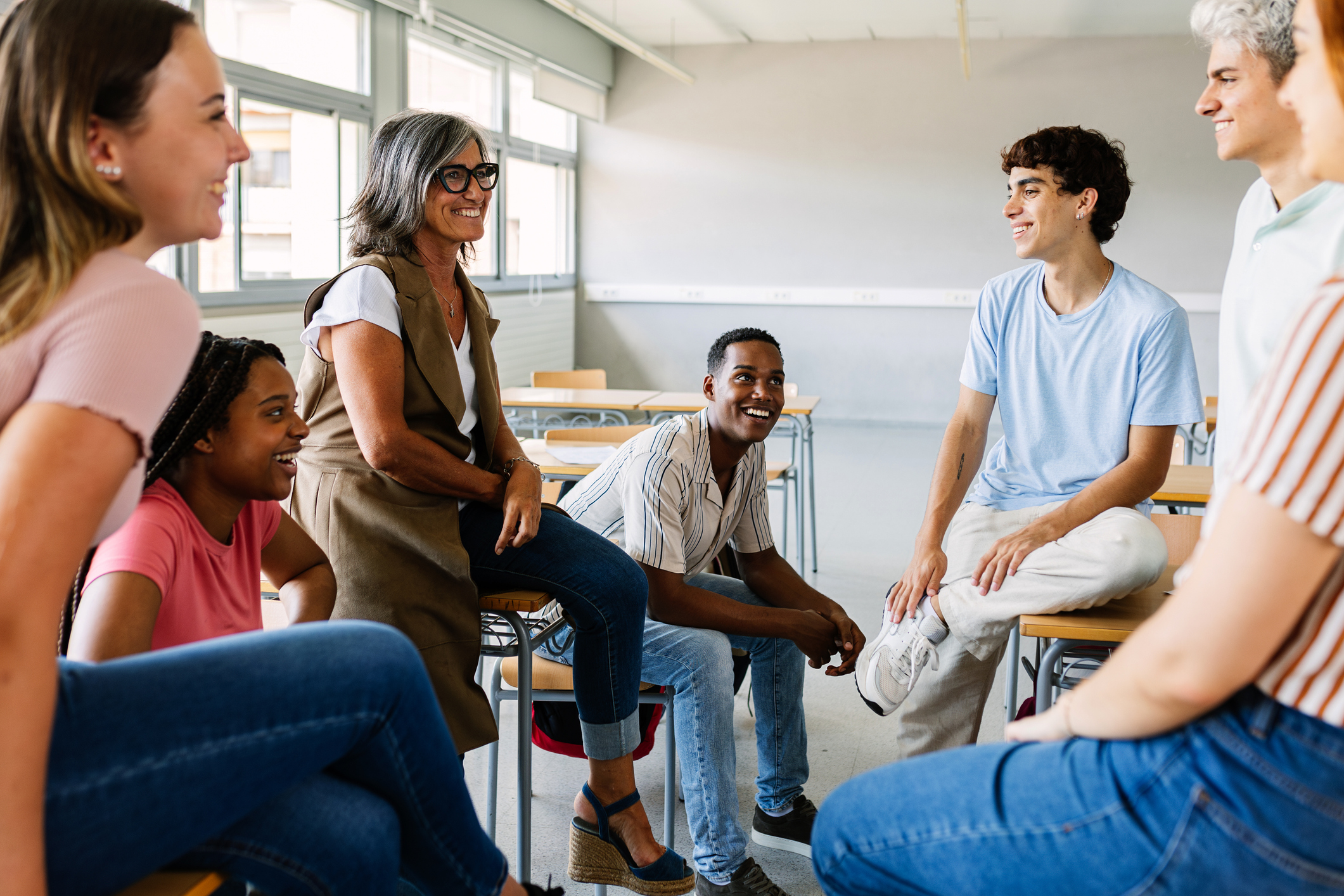
students sit in a circle talking

For example, one of the ways we build community in our class is through a discussion technique called a “rotating chair” that requires students to be inclusive, speak to each other with respect and seek to understand. It is a specific protocol that we use for conversations, but it sets a tone that carries into all of our interactions. This isn’t a radical, attention-getting, “end up on Fox News” kind of action, but it does wonders in building the trust and rapport that nurture kiddos and community. According to Fordham Institute’s article, “Children Learn Best When They Feel Safe and Valued,” students have the best chance of success when, “They follow well-established rules and norms for behavior that their teachers and school leaders model and maintain. Such a community is characterized by positive relationships between teachers and students, a place where genuine respect is the norm, and where all students feel they belong.” Key words here: norms, model, respect, belong. Every educator, from where they are, can practice these everyday efforts. 

This community isn’t going to build itself, so the educational community must begin the transformation from within. As we make progress, we can then partner with families and communities, and that is the more complicated plan; but as often is the case, it starts with us. 

Effective Teaching Tips: Strategies, Tools and Ideas

Empower your teaching with effective strategies and tools designed to support the whole student. This collection features insightful webinars and blogs covering student well-being, creating positive school environments, and fostering inclusive classrooms.

Subscribe to Our Newsletter

Want to see more stories like this one? Subscribe to the SML e-newsletter!

Amber Chandler
  Amber Chandler is a National Board Certified middle school ELA teacher in Hamburg, New York with a Master’s Degree in Literature, as well as a School Building Leader certification. She is the 2018 Association for Middle Level Educators’ “Educator of the Year.”  Amber has enjoyed a wide variety of... See More
Advertisement

Post a comment

Log in or sign up to post a comment.