

Dog and Pony Show? The Truth About Observations
Learn why classroom observations don’t have to be stressful. Amber Chandler shares practical tips, real talk, and strategies to make your teaching shine on observation day.
Share
November 25, 2025
Learn why classroom observations don’t have to be stressful. Amber Chandler shares practical tips, real talk, and strategies to make your teaching shine on observation day.
Share
I teach a class called “Deciphering Danielson’s Domains.” I know, super exciting, right? If you aren’t as dialed into observations, here’s a quick video of the queen herself, Charlotte Danielson. It’s from 2012, but I still share this with my students because hearing what observations are/should be and also what they are not, is important. As much as I hate truisms, especially when they are being used about something as important as an observation, it is still “just a snapshot.” A snapshot is accurate, especially when we consider that prior to the world of filters, we didn’t all look amazing in every single snapshot. As it turns out, I’m a giant nerd, and I really like to help people conquer their fear of observations and make them look as good as possible, in their best light. It’s not just new or untenured teachers who fear administrators, I’ve seen teachers who’ve been at it for 20 years obsess over what they should do. (First tip, btw, is the less you do, the better). The truth is this: It is a Dog and Pony show. Let me explain.
There is nothing I like less than housekeeping. Just the idea of “keeping the house” irks me. However, it has to be done, right? The same is true in our classrooms. Between student absences, field trips, testing and assemblies, I have to have what I cutely/cringingly call Ketchup Day. Students need time, in my presence, to complete work that they are missing. Not my favorite day, but it is completely necessary. Here’s the catch though. Housekeeping is boring. Under no circumstances just “do whatever you are doing” for an observation. If your observation is on Nov.18 (as mine is), if you are having students complete work that is missing in the portal (which God knows I could), don’t do it! You don’t want to bore anyone to death. Is it an authentic part of teaching? Sure. It isn’t observation-worthy though.
Instead, I’ll be using this really engaging lesson from WeWillWrite on a topic I know my kiddos are interested in: artificial Intelligence. Before we begin, we’ll brainstorm together with this slide, activating their prior knowledge. Now, I’m neither new nor untenured, but I don’t leave things to chance. We’ve used the WeWillWrite platform before, and it was a huge hit. Remember, housekeeping is boring!
In my Danielson class, one of the biggest things I emphasize is that we all bring our own talents and “magic” to our classrooms. The thing is, you can’t fake some magic that doesn’t exist (yet) for your observation. If your students don’t have a call-and- response thing going on, absolutely do not try to start that week. As you know, rituals and routines take time. This gem, “Effective Classroom Management Tips for New Teachers” from the Welcome-to-Teaching Conversation series, is the perfect place to start for new teachers; but to be honest, veterans have pretty good reasons to brush up on classroom management because it seems universally agreed upon that something is different about these kids, as this Education Week article explains. Lean on the rituals and routines you do have established, and set a goal for yourself to incorporate some new ideas the next time around—after they are well-established.
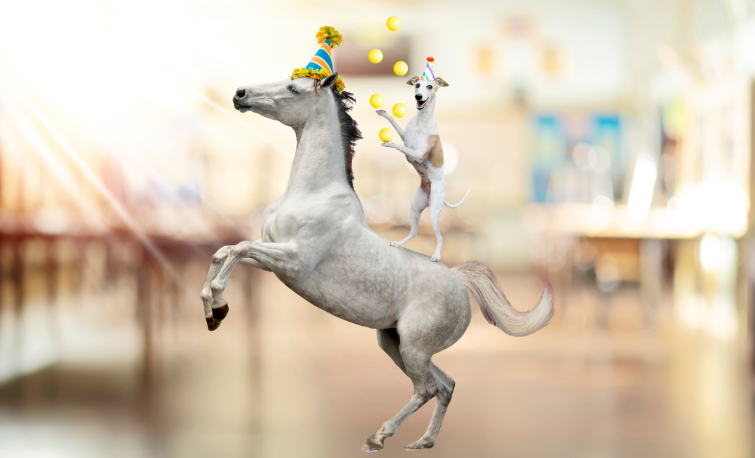
People will say to you, “Don’t put on a dog and pony show.” Unpopular opinion, but, who doesn’t like a dog and pony show? I know that this saying is meant to have a negative connotation, but let me put my twist on it. If there are dogs, and there are ponies, and they are putting on a show, then you sure as heck must have planned and prepared them for said show. Right? That would require knowledge of your “students,” as well as an atmosphere where your “students” feel comfortable taking risks and showing what they know in authentic ways. If you’ve lost the thread there, the fact is, your observation should be something special, and it should highlight what magic you bring to the classroom. Don’t be afraid to highlight what your students and you have created in the classroom, especially them!
Lean on the rituals and routines you do have established, and set a goal for yourself to incorporate some new ideas the next time around—after they are well-established.
Usually when I’m observed, I like to do a “rotating chair” with my students. It is essentially a Socratic Seminar with some minor adjustments, and you can see several examples on my website. Even pre-pandemic, I was pretty obsessed with helping students learn to put their phones down and effectively communicate. I wrote about rotating chairs in this piece from 2019, “Why Don’t They Just Talk to Each Other?” For an entire unit, check out this very popular “Student-Directed Socratic Seminars” post.
Observations shouldn’t be boring, but you shouldn’t take a wild risk that will put everyone in a bad light; but you should plan a lesson that will highlight what you and your students do well!
Empower your teaching with effective strategies and tools designed to support the whole student. This collection features insightful webinars and blogs covering student well-being, creating positive school environments, and fostering inclusive classrooms.