. Skip to main content
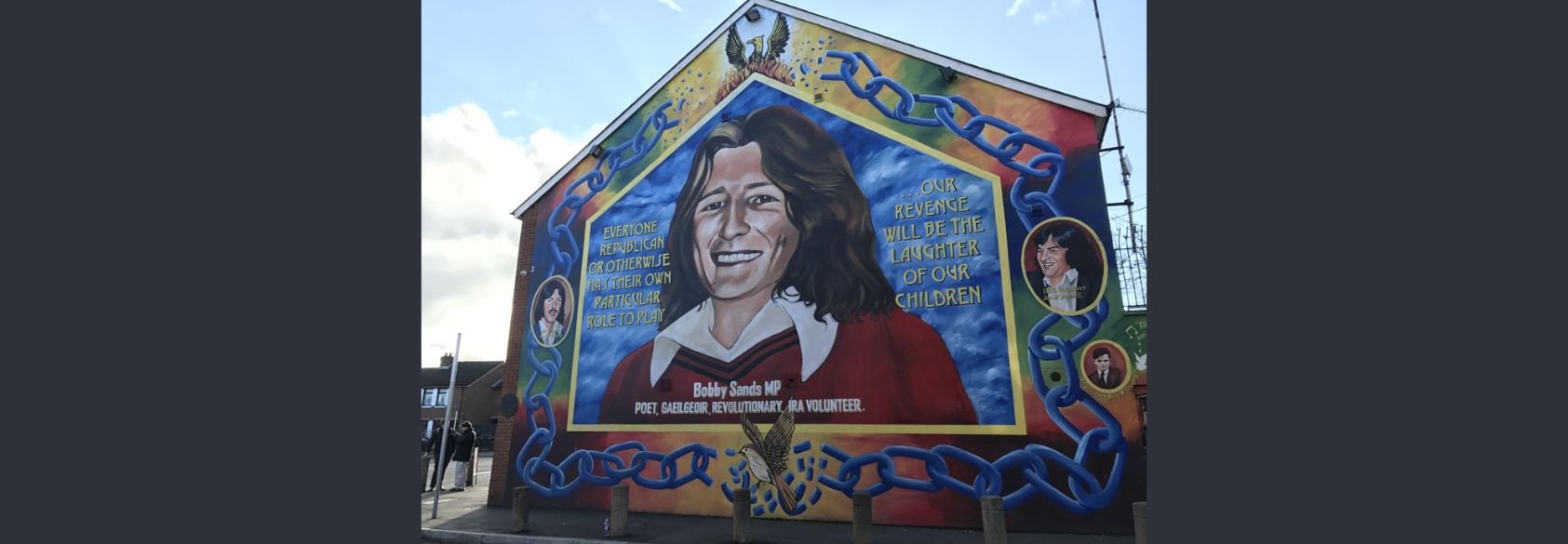
This mural in Belfast, Northern Ireland, is dedicated to Bobby Sands, a volunteer for the Provisional Irish Republican Army who became a member of the United Kingdom Parliament. He died on hunger strike while in prison. Photo by Ivette Feliciano/PBS NewsHour

This mural in Belfast, Northern Ireland, is dedicated to Bobby Sands, a volunteer for the Provisional Irish Republican Army who became a member of the United Kingdom Parliament. He died on hunger strike while in prison. Photo by Ivette Feliciano/PBS NewsHour

How Peace Has Held Since the Troubles and What the U.S. Can Learn

September 30, 2025

How Peace Has Held Since the Troubles and What the U.S. Can Learn

How Northern Ireland avoided relapse — and lessons for America.
Share

Share On Facebook
Share On Twitter
Share On Pinterest
Share On LinkedIn
Email

Note: If you are short on time, watch the video and complete this See, Think, Wonder activity: What did you notice? What did you think about? What did it make you wonder?

In a recent report, Judy Woodruff explored the history of violence in Northern Ireland as a warning to our own country about how quickly identity-based conflicts can spiral out of control. She now reports from Belfast on efforts to bridge the deep divisions that remain there, decades after their conflict officially ended. It’s part of her series, America at a Crossroads.

View the transcript of the story.

Remote video URL

Discussion Questions

  1. Where is Belfast?
  2. What were the "Troubles"?
  3. When did the Troubles take place? (See Britannica to learn more)
  4. How does Alan Waite hope that R City will help integrate young people from single-identity neighborhoods?
  5. Why does growing up in a neighborhood or family influence young people so much, according to members of R City?

Focus Questions

  • "...if you're only hearing the stories that's around you, then you're getting the same thoughts and feelings that those older generation had many years ago," said Alan Wait. How can you respect your family's values but also develop your own set of values and identity? Why might this be important to do despite its difficulty?
  • Monica McWilliams said, "The people on the ground are participating every single day as much as you are [the politicians] in politics"? Expand on what you think she means. Can you think of examples in American history, past or present, where this is also the case?
  • Media literacy: What additional information would you like to know about the Troubles? How could you find out more?

Extension Activity

Read the Gilder Lehrman article "On Civil Dialogue" by Keidrick Roy. You can also watch the video of Roy discussing civil dialogue on this page.

  • Roy writes: "The idea of 'civil dialogue' can lead to heated debates. What does it mean to be 'civil'? What counts as 'dialogue'? Who gets to decide?"
  • What two factors need to be in place for civil dialogue to work, according to Roy? What other ways do you propose for "advancing public discussion"?
  • How do the three historic examples used by Roy demonstrate civil dialogue?

Take a look at this perspective on civil dialogue by Jeffrey Rosen, president and CEO of the National Constitution Center. What factors need to be included for civil dialogue to take place, according to the video?

Remote video URL

Lesson Plans on International Politics

Find more resources on international politics and how they relate to your students with our free collection of preK-12 lesson plans and teaching resources.

Republished with permission from PBS News Hour Classroom.

PBS News Hour Classroom
PBS News Hour Classroom helps teachers and students identify the who, what, where and why-it-matters of the major national and international news stories. The site combines the best of News Hour's reliable, trustworthy news program with lesson plans developed specifically for... See More
Advertisement

Post a comment

Log in or sign up to post a comment.